25 abril 2018
Professional Reading Club: The New One Minute Manager
A revised edition of the timeless business classic written by Ken Blanchard and Spencer Johnson updated to help today’s readers succeed more quickly in a rapidly changing world. For decades, The One Minute Manager® has helped millions achieve more successful professional and personal lives. While the principles it lays out are timeless, our world has changed drastically since the book’s […]
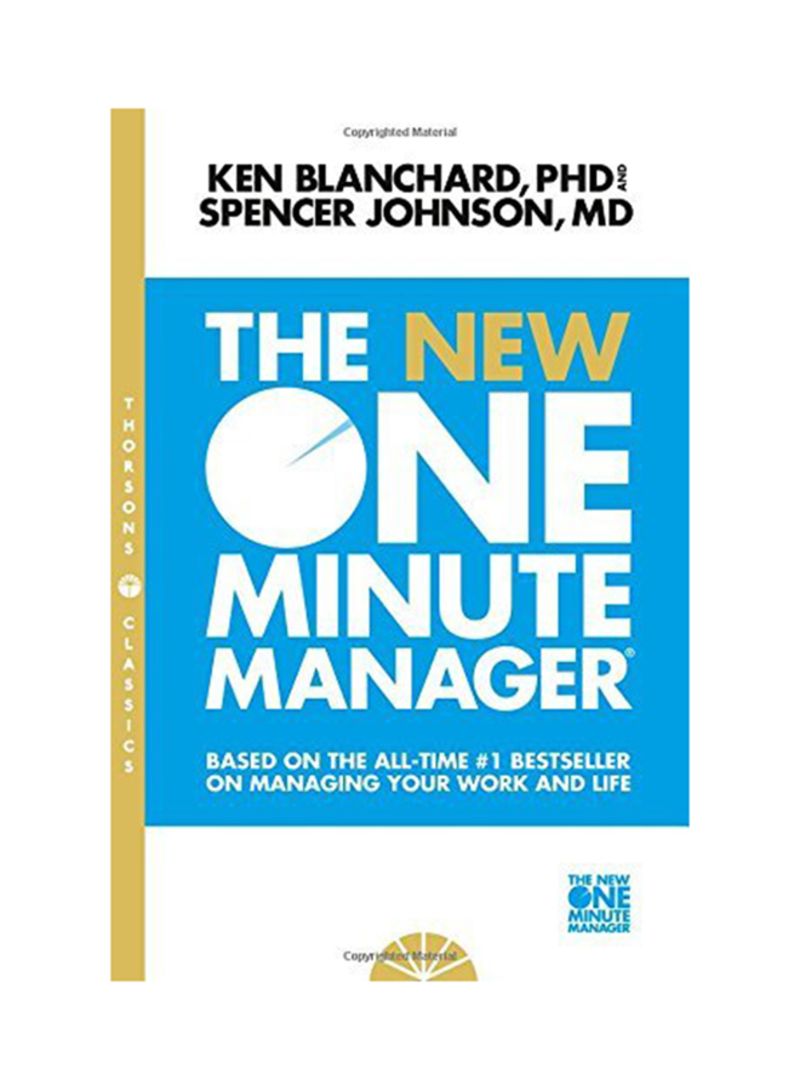
A revised edition of the timeless business classic written by Ken Blanchard and Spencer Johnson updated to help today’s readers succeed more quickly in a rapidly changing world.
For decades, The One Minute Manager® has helped millions achieve more successful professional and personal lives. While the principles it lays out are timeless, our world has changed drastically since the book’s publication. The exponential rise of technology, global flattening of markets, instant communication, and pressures on corporate workforces to do more with less—including resources, funding, and staff—have all revolutionized the world in which we live and work.
Now, Ken Blanchard and Spencer Johnson have updated The One Minute Manager to introduce the book’s powerful, important lessons to a new generation. In their concise, easy-to-read story, they teach readers three very practical secrets about leading others—and explain why these techniques continue to work so well.
As compelling today as it was thirty years ago, this classic parable of a young man looking for an effective manager is more relevant and useful than ever. In the Professional Reading Club we propose you the book The One Minute Manager.
[/vc_column_text]
Ya puedes leer el resumen completo del libro
The New One Minute Manager is an updated revision of the bestselling book, The One Minute Manager, published in 1982, a small book that requires only about an hour to read and uses a parable to teach three crucial management skills, that one learned will stick in your memory forever. In the introduction to the new version, authors Ken Blanchard an Spencer Johnson discuss the differences in the world in the more than thirty years since the original book was published. Must has changed in the past three and a half decades, notably the near unanimous agreement that top down command and control management is counterproductive and that longer just a pay check for employees but must, instead, be a source of fulfillment and purpose“.
As in the original edition, the new edition tells the story of a young man who has been looking all over the world for a great manager to work for and learn from. He finally finds a great manager, who is know as the “New One Minute Manager”. This great manager introduces him to his core managing philosophy that “people who feel good about themselves produce good results. This manager has found the secret formula to concurrently achieve results for the company, and fulfilment for his team; and is able to adapt his techniques to keep up with rapid changes.
The young man then goes on to talk with there lower- level manager of the great manager’s team who explain the three secrets of one-minute management and the young man discovers his 3 secrets, and is eventually offered a job, and becomes a New One Minute Manager.
The fictional manager if the 1980s made it clear what employees’ responsibilities were and how they would be held accountable. But management has changed, according to the New One Minute Manager. The manager in the new edition discusses the problems with top-down management: “ Today that structure is too slow. It doesn’t inspire people an it stifles innovation. Customers demand quicker service and better products, so we need everyone to contribute their talent. “ This leads to the necessity of collaboration in goal setting, decision-making, and strategizing.

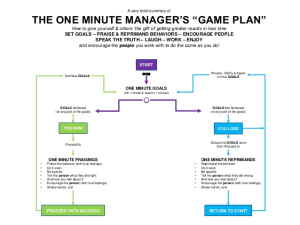
So the first manager describes the first secrete: One Minute Goals: Three to five succinctly formulated goals (readable in one minute) tied to the key areas of responsibility. This remains essentially the same, except the goal-setting is now a collaborative exercise.
Secret One: One minute goals
One common problem in organizations is the lack of clearly defined roles and responsibilities. In order for people to be effective:
They must know exactly what their goals are and what success looks like.
This definition must be shared between the staff and the supervisor.
One minute Goals are about setting goals that can fit in 1 page, and be reviewed daily in less than 1 minute every day.
After setting one-minutes goals, stay in close contact wit6h your staff:
- Monitor their activities or results, and request for short progress reports.
- It is vital to explain that the reason for your close supervisions in not to pick on their mistakes, but to catch them doing something right.
This paves the way for you to apply the other 2 secretes of the News One Minute Manager: to praise people when they do something right, and re-direct them when they are off-track.

Secret two: one-minute praises
The second manager describes one-minute praises. The concept of one minute praises is encapsulated in the highlighted phrase, unchanged from the first edition, “Help people reach their full potential. Catch them doing something right and telling them how much you appreciate it is still a critical management skill. “One -minute praises must be immediate and specific, followed by an encouragement to do more of the same”.
Most people don’t know how they are performing. Nor how they can improve. Often, managers wait until the annual performance review to provide feedback- by then, there are too many incidents or issues to be addressed in specific actionable detail
Once you notice a staff doing something right, offer you one-minute praise: In a nutshell:
- Share your praises (30 seconds)
- Pause for a short while
- Affirm your staff 30 second.
Secret three: ONE MINUTE RE DIRECT, which was originally the One Minute Reprimand
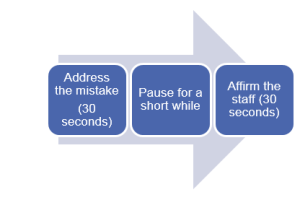
The new edition diverges slightly from the original edition with the third secret of one-minute management. In the original edition, the third secret was one minute reprimand. The manager would tell employees who made a mistake exactly what mistake they made and how disappointed he was with them for making the mistake.
At the same time, the one-minute manager would explain that he had a problem with the specific mistake, not with them, and that he still valued them. What happens when people make mistakes or do something wrong? Similar to the one minute praising, the key is to provide feedback as soon as possible, using the One -Minute Re- Direct.
Maybe the word “reprimand” sounds too sever for today’s workplace. The concept of re directing someone is definitely more collaborative although it is still isn’t a pleasant experience for either employee or the manager.
This skill involves managers reviewing an employee’s mistake with the employee, expressing how they feel about the mistake and its impact on results, and telling the employee that they think well of him or her as a person and have confidence that performance will improve. And them Re-direct is over.
The thirds secret still concerns responding to a mistake and follows a similar path: The manager confirms with the employee the fact of the mistake, expresses how he or she feels about the mistake and then pauses to give time for the employee to think about the mistake.
In the original edition, the purpose of the pause was to create a few seconds of uncomfortable silence to let them feel how you fell. In the new edition, the pause’s `purpose is “to allow people time to feel concerned about what they have done”.
“Both the reprimand and redirect end with the same expression of concern about the specific mistake and not the person, and the manager reaffirming his or her trust in that person.
The true value in this new edition is found in the stylistic changes that help the book shake its page. The characters are no longer Mr. Trenell and Ms Brown. But Paul and Teresa. The secretary, Ms. Metcalfe is now the assistant Courtney, and she does not bring in a list of names to her boss at his intercom’ d request; he prints out list himself from his computer. Those changes are important in conveying the relevance of Blanchard’s and Johnsons classic propositions to today’s workplace.
[/groups_member][/vc_column_text]